Regular Pistachio Powder (Pistachio Meal/Flour) Specifications
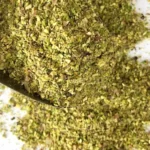
The detailed specifications of Regular Pistachio Powder are shown in the table below:
| Color | Naturally Purple and Brown skin, green and yellow inside. |
| Type | Powder, obtained from normal pistachio kernel |
| Flavor | Original taste |
| Smell | Natural Pistachio kernel’s aroma without foreign odor |
| Moisture | 5%-6% |
| Size | Up to 1 mm |
| Shelf Life and Storage Condition | 24 month, Keep in a cool and dry place, away from direct sunlight |
| Harvesting time | September & October |
| Chemical/Artificial Additives | No, completely natural and healthy, GMO Free, Gluten-Free |
| Packing type in bulk | 10kg vacuumed packing in carton |
| Consumer Packing | from 100g to 1000g in different kind of packing per customer request |
| OEM | Possible |
Pistachio Powder (Pistachio Meal/Flour) Uses
Some of the common applications of pistachios, including Regular Pistachio Powder are:
- As a snack: pistachios are either roasted or raw, toasted with oil or honey, or tossed with salt, providing a guilt-free substitute for junk food.
- As salad overtops: chopped pistachios can be sprinkled over salad (for example, lettuce or arugula), giving it a mouthwatering appeal and delicious taste.
- Ground into sauces: Regular pistachio flour can be added to different sauces and dips, such as pistachio pesto sauce, pistachio romesco sauce, chardonnay pistachio sauce, pistachio butter, cranberry pistachio sauce, basil pistachio sauce, pistachio-yogurt sauce, and pistachio spread cream.
- Added to bread dough and pastry: Regular Pistachio Meal can supplement bread dough with proteins and vitamins and give it a thicker texture.
- In homemade desserts: chopped pistachios are commonly sprinkled over or mixed with various kinds of dessert, including:
- pistachio ice cream
- pistachio and cranberry white chocolate bar
- pistachio watergate cake
- salted chocolate pistachio shortbread
- pistachio drop cookies
- pistachio pie
- cranberry pistachio fudge
- pistachio cupcake
- chocolate, pistachio, and tahini truffle
- pistachio pie bars
- chocolate pistachio brownies
- pistachio oat squares
- pistachio gelato
- Chocolates: pistachio tablet chocolate, pistachio milk chocolate, dark pistachio chocolate, pistachio gift chocolate, pistachio chocolate bar, chocolate coated pistachio, pistachio holiday chocolate, pistachio Santa chocolate.
- Restaurants: pistachio-based dishes and desserts including pistachio salmon with salsa greens, pistachio salads with figs and goat’s cheese, salsa di pestachi, courgetti salad with pistachio pesto.
- Energy bars: some pistachio energy bars include: cranberry-pistachio energy bars, Pistachio raspberry energy bars (Vegan + paleo), gluten-free cardamom pistachio energy bars, citrus pistachio energy bars, and pistachio energy balls
- Bakery: pistachio cookies, pistachio chocolate chips cookies
- Confectionary: pistachio delights, pistachio cakes, pistachio Halva, pistachio baklava, glazed pistachio doughnuts, pistachio galette
- Sausages: Modern versions of sausages such as Mortadella are normally flavored with pistachios.
- In traditional dishes: Pistachios are a common nut ingredient in many traditional dishes from an array of cultures. To give you a few examples:
- In Persian cuisine: not only Iran is a major producer of pistachios, but also pistachios are considered an important ingredient in many Iranian rice and chicken dishes (for example, Kufteh Pesteh, Persian squash, and pistachio roast) and desserts toasted with saffron and lemon juice, or tossed with sea salt.
- In Turkish dishes: in many Turkish recipes, kernel pistachios are used as minced ingredients to add flavors to traditional sweets such as the honey-phyllo dessert baklava, or as topping on Turkish delight.
- In Italian dishes. Kernel pistachios are used commonly to add flavor to Italian pasta, noodles, or ground into a pistachio sauce.
- In Indian cuisine. Kernel pistachios have traditionally been a staple ingredient in Indian dishes such as rice puddings, pilafs, cookies, and a spiced pistachio fudge called Pista barfi.
Pistachio Powder Price: Factors That Affect Cost
Several factors influence the price of pistachio powder wholesale price:
- Kernel Quality & Variety: Powder made from bright green, premium-grade kernels (e.g. Green Peeled Kernels or GPPK) is more expensive.
- Packaging: Retail packaging like 1kg kraft bags costs more than bulk-packed options like 5kg and 10kg vacuum-sealed bags.
Certification: Aflatoxin test adds to the cost of pistachio powder
Green Peeled Pistachio Kernel Color Grades (A to E)
In the international pistachio trade, Green Peeled Pistachio Kernels — often known as GPPK, peeled kernels, or skinless pistachio kernels — are mainly evaluated by one important factor: color.
The greener the kernel, the higher its market value tends to be. This is especially important for food manufacturers, pastry brands, gelato producers, and industrial buyers looking for specific visual and flavor characteristics in their final products.
To create consistent quality for different industries, peeled pistachio kernels are usually separated into several color categories. These grades help buyers choose the right option based on both application and budget.
Why Color Matters in GPPK
Color is not only about appearance.
In premium food products, greener kernels are often associated with:
- Higher visual quality
- Earlier harvest timing
- Fresher flavor profile
- Better presentation in desserts and confectionery
For this reason, color grading has become one of the most important standards in the global pistachio ingredient market.
GPPK Color Grades Explained
1. Grade A – Extra Green
Grade A is the highest and rarest category.
These kernels come from very early-harvest pistachios and contain the strongest natural green color.
Main Features
- Deep emerald-green appearance
- Minimal yellow tones
- Premium visual quality
- Strong market demand
Common Applications
- Luxury chocolates
- Premium gelato
- High-end pastries
- Gourmet dessert decoration
- Export-focused confectionery products
Because production volume is limited, Grade A kernels are usually sold at the highest price point.
2. Grade B – Bright Green
Grade B kernels still offer a rich green appearance but with slightly lighter intensity compared to Grade A.
Main Features
- Bright natural green color
- Balanced appearance and cost
- Good flavor consistency
Common Applications
- Macarons
- Pistachio creams
- Bakery fillings
- Premium ice cream production
Many manufacturers choose this grade when they want strong color quality without the premium pricing of Grade A.
3. Grade C – Green to Yellow-Green
This category is one of the most widely used grades in commercial food manufacturing.
Main Features
- Mixed green and yellow tones
- More economical pricing
- Good overall flavor profile
Common Applications
- Cookies and cakes
- Industrial bakery products
- Pistachio spreads
- Internal food processing
For many factories, this grade offers a practical balance between appearance and production cost.
4. Grade D – Light Yellow-Green
Grade D contains less visible greenness and is generally used in applications where color is not the primary focus.
Main Features
- Pale green or yellowish appearance
- More mature kernels
- Cost-efficient option
Common Applications
- Biscuit production
- Food manufacturing blends
- Processed fillings
- Bulk ingredient use
5. Grade E – Yellow / Industrial Grade
This is the most economical category in the peeled kernel market.
Main Features
- Mostly yellow or cream-colored kernels
- Lower visual value
- Suitable for high-volume processing
Common Applications
- Industrial food production
- Pistachio paste manufacturing
- Grinding and powder production
- Flavor-focused recipes
Although the color is less vibrant, the kernels still provide natural pistachio taste and aroma.
Pistachio Powder Grades & Types: From Premium Green to Flour
Not all pistachio powder is produced the same way. In the food industry, the quality of pistachio powder can vary a lot depending on the type of kernel used, harvest timing, processing method, and even color expectations in the final product.
For bakeries, confectionery brands, ice cream manufacturers, and food importers, understanding these differences is important when choosing the right product for a specific application.
Below is a practical breakdown of the most common pistachio powder grades found in the international market.
1. Super Green Pistachio Powder (Premium Grade)
This is considered the highest-quality pistachio powder available in the market and is mainly used in luxury desserts and premium food products.
What Makes It Different?
Super green pistachio powder is made from early-harvest pistachio kernels that are picked before full maturity. Because the kernels are younger, they keep their bright natural green color.
Main Characteristics
- Deep emerald-green appearance
- Strong natural pistachio aroma
- Smooth texture
- Naturally rich in antioxidants
- No artificial coloring required
Common Uses
This grade is usually preferred for products where appearance matters as much as flavor, such as:
- French macarons
- Premium gelato and ice cream
- Luxury chocolates
- Dessert decoration
- High-end pastry fillings
Because of its color intensity and limited production volume, this type is usually the most expensive category of pistachio powder.
2. Standard Green Pistachio Powder (Commercial Grade)
This is the most widely used pistachio powder in commercial baking and food manufacturing.
Unlike premium green powder, this version is produced from fully mature pistachios, which gives it a more natural mix of green and light brown tones.
Main Characteristics
- Balanced pistachio flavor
- Green-yellow color with natural brown specks
- Higher oil content from mature kernels
- More cost-effective for large-scale production
Common Uses
This grade works well in products where the powder is blended or baked into the recipe, including:
- Cakes and muffins
- Cookie dough
- Baklava
- Pastry creams
- Biscuit fillings
- Dessert crusts
For many manufacturers, this grade offers the best balance between quality and price.
3. Pistachio Flour vs Pistachio Powder
Although these two names are sometimes used interchangeably in the market, there is usually a technical difference between them.
Pistachio Powder
- Finer texture
- Often brighter in color
- Usually produced for decoration or premium culinary use
- Can contain a higher percentage of green kernels
Pistachio Flour
- Slightly coarser texture
- More commonly used in baking and industrial production
- Focuses more on functionality than appearance
- Often produced from mature roasted kernels
In practice, the exact definition may vary between suppliers, but texture and intended application are usually the main differences.
Choosing the Right Pistachio Powder
The best option depends on how the ingredient will be used.
Premium Green Powder is ideal for:
- Visual presentation
- Luxury desserts
- Gourmet products
- Premium retail packaging
Standard Pistachio Powder is better for:
- Commercial baking
- Large production runs
- Cost-sensitive recipes
- Internal food applications
Understanding these grades helps buyers select the right product based on flavor expectations, appearance requirements, and production budget.






Hix –
Great.
Khoshbin customer –
My customers love them.
Rajab –
Totally different from what it shows here. I got to ordered a sample first.
Khoshbin customer –
I ordered a few packs.. Great quality .. I give a 4